Grid-Tied, Off-Grid & Hybrid Solar Panel Installation and Battery Storage in Kenya
Élan Climat & Énergie designs and installs grid-tied, off-grid, and hybrid solar PV systems engineered for maximum yield across Kenya. Our solar division handles site surveys, structural mounting, inverter sizing, lithium battery storage, and KPLC grid interconnection for homes, businesses, and farms in Nairobi, Mombasa, Kisumu, Nakuru, and rural Kenya, and frequently co-engineers solar systems alongside our HVAC, cold room, and electrical scopes on the same project.

Grid-Tied, Off-Grid & Hybrid Solar Panel Installation and Battery Storage in Kenya
Élan Climat & Énergie designs and installs grid-tied, off-grid, and hybrid solar PV systems engineered for maximum yield across Kenya. Our solar division handles site surveys, structural mounting, inverter sizing, lithium battery storage, and KPLC grid interconnection for homes, businesses, and farms in Nairobi, Mombasa, Kisumu, Nakuru, and rural Kenya, and frequently co-engineers solar systems alongside our HVAC, cold room, and electrical scopes on the same project.
Design & Energy Audit
Kenya receives some of the highest solar irradiance in the world — averaging 4 to 6 peak sun hours daily across most of the country — but turning that natural advantage into real, bankable savings depends entirely on accurate system sizing. Every Élan Climat solar project starts with an energy audit of the client's actual consumption pattern, pulled from utility bills and, where useful, temporary load logging, rather than a generic per-square-metre estimate.
We then carry out a shading analysis and structural assessment of the proposed mounting location, whether that's a rooftop, a ground-mount array, or a carport structure, to confirm the site can support the system without compromising the building's structural integrity or the array's expected output. For commercial and industrial clients, the energy audit also identifies which loads are best offset by solar directly versus which loads would benefit more from a battery-backed hybrid configuration.
Equipment Selection
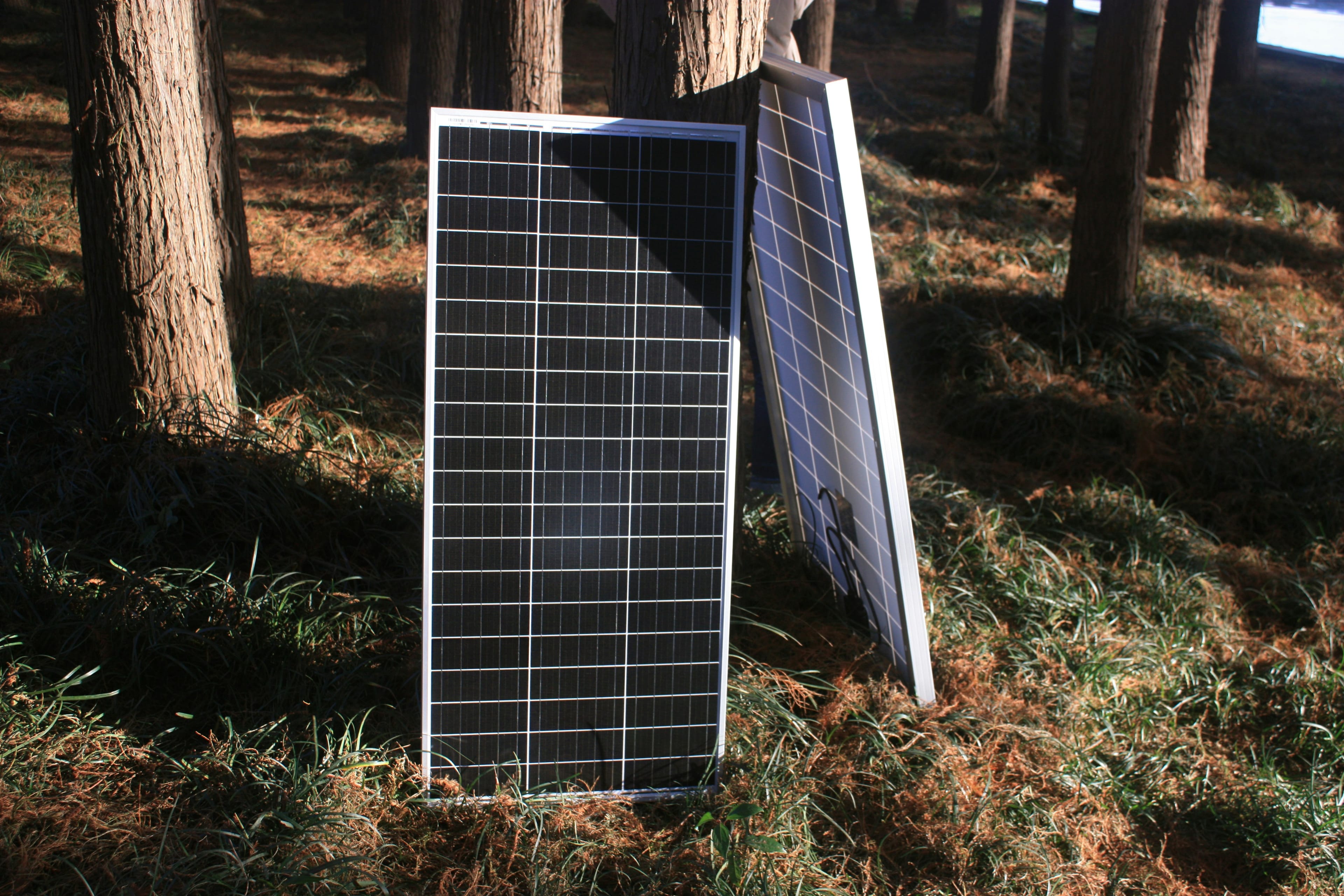
We supply and install tier-1 solar panels and inverters exclusively — manufacturers with a proven bankability track record and long-term performance warranties, not the cheaper unverified imports that quietly underperform within a few years. Battery storage designs use LiFePO4 (lithium iron phosphate) chemistry, chosen specifically for its long cycle life and stable performance in Kenya's ambient temperature range, which is considerably kinder to battery chemistry than the high-heat conditions found in some other African markets.

Installation & Grid Interconnection
Installation covers structural mounting with appropriate wind and seismic loading allowances, DC wiring with correctly rated cable and fusing, AC wiring back to the distribution board, earthing, and surge protection. For grid-tied and hybrid systems, we handle the full KPLC interconnection process — system documentation, export meter installation, and interconnection agreement processing — so clients aren't left navigating utility paperwork themselves.
Hybrid & Battery Storage Configuration
Hybrid systems are configured to prioritise solar self-consumption first, battery charging second, and grid export or import last — the sequencing that delivers the strongest financial return under Kenya's current tariff structure. For off-grid sites, battery banks are sized to cover critical loads through extended cloudy periods, with a clear, documented basis for that sizing rather than a rounded-up guess.
Commissioning & Monitoring
Every system is commissioned with remote performance monitoring, giving the client visibility into daily generation, consumption offset, and any underperformance alerts without needing to climb onto the roof to check. This also gives our operations and maintenance team early warning of degrading panel strings or inverter faults, often before the client notices any change in their bill.
Costs, Payback Period & Financing Considerations
Solar payback periods in Kenya typically range from 3 to 6 years for commercial and industrial installations, depending on the client's existing tariff band and daytime consumption profile, and somewhat longer for residential systems where usage is more evening-weighted. During the proposal stage we model expected generation against the client's actual load profile to give a realistic payback estimate rather than an optimistic headline figure, and we advise on structuring projects to qualify for available financing or leasing arrangements where relevant.
Operations & Maintenance
Panel soiling from dust is a genuine yield loss factor in Kenya's dry seasons, particularly for sites near unpaved roads or agricultural land. Our operations and maintenance (O&M) contracts include scheduled panel cleaning, torque-checking of mounting hardware, inverter firmware updates, string-level performance verification against expected output, and battery health checks for hybrid and off-grid systems — the routine work that keeps a system performing at its commissioned yield for the full 25-year design life rather than degrading unnoticed.
Solar Installation Across Kenyan Industries
Rooftop systems sized to a household's real usage pattern, often paired with battery storage to ride through KPLC outages without disrupting daily life.
Larger rooftop or ground-mount arrays designed to offset daytime industrial or commercial loads, with net-metering arrangements handled end-to-end.
Off-grid and hybrid systems powering irrigation pumps, cold storage, and farm operations in areas with limited or unreliable grid access.
Solar systems co-engineered with HVAC loads, often combining a hybrid inverter with DC-inverter air conditioning for maximum efficiency and the strongest possible return on investment.
Grid-tied and hybrid solar for schools, colleges, and NGO facilities, frequently delivered as part of donor-funded or UNDP-linked energy access programmes.
What Sets Our Solar Installation Apart
Tier-1 Equipment Only
We specify panels and inverters from bankable tier-1 manufacturers with proven performance in East African conditions.
EPRA-Registered Installer
Fully registered for KPLC grid-interconnection work, handling all paperwork and approvals on your behalf.
Integrated Solar-HVAC Design
Unique capability to co-engineer solar and HVAC systems together for maximum energy offset.
Remote Monitoring
Every system we install is commissioned with remote performance monitoring so you always know your system is working.
Common Questions About Solar Installation in Kenya
What is the cost of solar panel installation in Kenya?
Solar installation costs in Kenya depend on system size and type. A 3kW residential system starts from approximately KES 350,000 installed, while a 50kW commercial rooftop system ranges from KES 4–6 million. We provide detailed proposals after a free site survey and energy audit.
How does KPLC net-metering work in Kenya?
KPLC's net-metering programme allows grid-tied solar customers to export surplus power to the grid and receive credit against their electricity bill. Élan Climat handles the full application process with KPLC, including system documentation, export meter installation, and interconnection agreement processing.
How long do solar panels last in Kenya's climate?
Tier-1 solar panels installed in Kenya typically deliver 25+ years of performance, with most manufacturers guaranteeing 80% output at 25 years. Kenya's climate is favourable for solar — UV exposure is high but temperatures are moderate, which is ideal for panel efficiency and longevity.
Do you install solar systems in rural Kenya?
Yes. We have experience deploying off-grid solar systems for farms, schools, health facilities, and community projects across rural Kenya including Western Kenya, the Rift Valley, and coastal regions. Off-grid systems are sized to cover critical loads with adequate battery backup.
Can solar power run air conditioning in Kenya?
Yes. A correctly sized solar system can power HVAC equipment, including air conditioning. We specialise in integrated solar-HVAC designs where the solar system is engineered around the HVAC load profile, often combining a hybrid inverter with a DC-inverter air conditioning unit for maximum efficiency.
What battery chemistry do you use for solar storage in Kenya?
We use LiFePO4 (lithium iron phosphate) batteries for their long cycle life, thermal stability, and strong performance in Kenya's moderate ambient temperatures, compared to older lead-acid or less stable lithium chemistries.
How much roof space do I need for a solar installation?
As a rough guide, 1kW of solar typically requires 6–8m² of unshaded roof area depending on panel wattage and orientation. We confirm exact requirements during the site survey, accounting for shading from trees, parapets, or neighbouring structures.
What happens to my solar system during a power outage?
For grid-tied systems without battery storage, the inverter shuts down during a grid outage as a safety requirement. Hybrid systems with battery storage can continue powering selected critical loads automatically during an outage, switching back to normal operation once grid power returns.
What is the typical payback period for a commercial solar installation in Kenya?
Most commercial and industrial solar installations in Kenya achieve payback within 3 to 6 years, depending on daytime consumption and existing tariff band. We model expected generation against your actual load profile during the proposal stage to give a realistic, site-specific payback estimate rather than a generic industry figure.
Do you provide ongoing operations and maintenance (O&M) for solar systems?
Yes. Our O&M contracts cover panel cleaning, mounting hardware inspection, inverter firmware updates, string-level performance checks, and battery health monitoring, keeping the system performing at its commissioned yield across its full design life.
Other Services We Offer in Kenya
Get a Quote for Solar Installation in Kenya
Our engineers are ready to assess your requirements and provide a detailed, itemised proposal — at no cost to you.